
Fire and Glory: Blood War
KOOFEIStrategy
4.61.28K Reviews
- Version
- 1.0.177
- Installs
- 1.00M
- Age Rating
- Everyone 10+
Screenshots
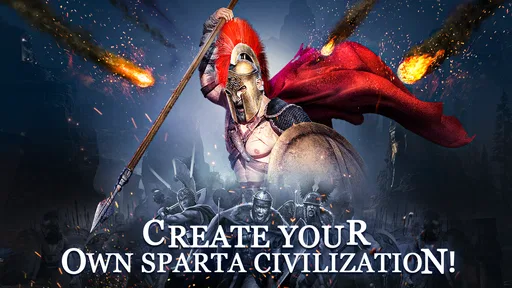
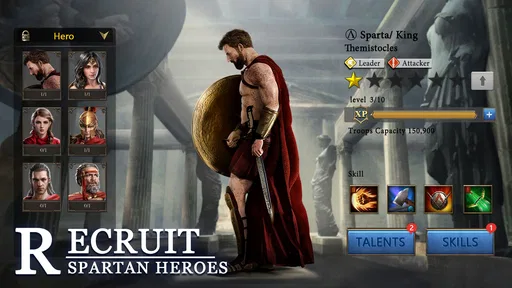
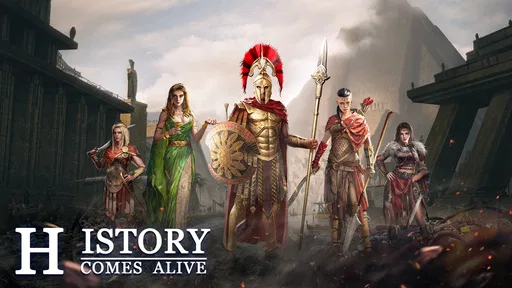
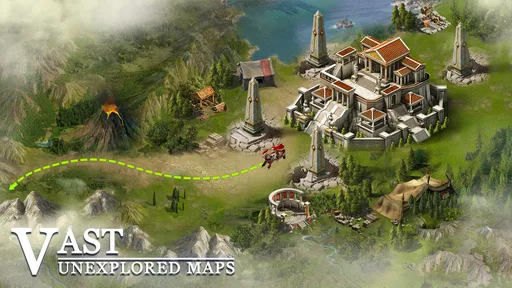
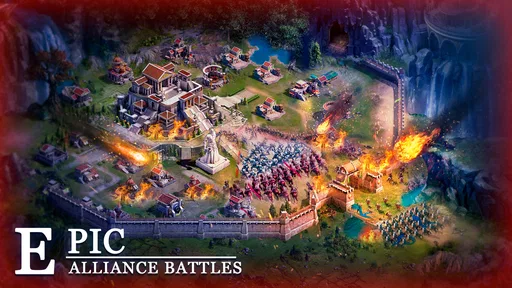
Our Review of Fire and Glory: Blood War
 Analysis by Appyee
My first impression of Fire and Glory: Blood War was that it wants to make ancient Sparta feel like a personal strategy project rather than a short battle game. It is a free strategy game from KOOFEI, built around the fantasy of guiding a Spartan empire through conflict and expansion. The theme is immediately clear, but the more important question is whether the game gives a new player a comfortable route from installation to a first worthwhile decision. In my experience, it does, provided you approach it as a gradual management game instead of expecting instant action.
The game is available for Android devices running Android 6.0 or later, and its Everyone 10+ content rating makes it approachable for a broad audience. It has attracted over a million installs and holds a 4.6 average from around ten thousand ratings, which suggests that the central idea connects with many players. Those figures do not replace personal experience, though. The real appeal is the steady feeling that each choice is preparing the next one: improving your position, understanding your resources, and deciding when a battle is worth the risk.
From installation to your first meaningful victory
I’ll focus on the first stretch of play: how the opening tasks build into a meaningful win, and how to use that first result to choose a sensible next step. I find it helpful to finish one objective before branching out, since the reward often gives clearer context for what to prioritize. That habit also sets up the next question: what should a new player expect from the game’s pace and style?
What to expect when you begin
Fire and Glory: Blood War is best understood as a strategic empire-building experience with a Spartan setting. I would not install it expecting a purely reflex-based game where success depends on tapping quickly. The satisfying moments come from reading the situation, preparing properly, and making progress that remains useful after an individual encounter ends.
That distinction matters for first-time players. The ancient-war presentation may suggest that the main attraction is constant fighting, but the strategic layer is what gives the battles context. You are not simply looking for the next opponent; you are trying to create a stronger position before committing yourself. This makes the game more suitable for players who enjoy planning and gradual improvement than for someone who wants a self-contained match that ends after a few minutes.
The opening experience is easier if you treat every early activity as a lesson. Instead of rushing through instructions, I recommend noticing what the game asks you to improve, what it places in front of you first, and which actions seem to unlock the next part of your progress. That approach prevents a common mistake: spending attention on impressive-looking options before understanding the basic rhythm of the game.
There is also a useful psychological advantage to the Spartan theme. It gives your early decisions a clear identity. You are not managing an abstract collection of menus; you are building toward the image of an organized war power. The presentation helps keep the early stages from feeling like a list of unrelated tasks, even when the game asks you to move between preparation, upgrades, and conflict.
Setting up your first session without wasting progress
After installing the game, I suggest beginning with a short, focused session rather than trying to understand everything at once. Let the introductory guidance lead you through the first available actions, and resist the temptation to explore every option immediately. A new player usually benefits more from completing the first clear objective than from opening every menu and trying to predict its long-term importance.
My practical setup routine is simple. First, identify the action the game is presenting as your immediate priority. Next, check what that action consumes or unlocks. Finally, look at what becomes available afterward before committing to a second major decision. This small pause is valuable because strategy games often teach their systems through sequence: one improvement makes another worthwhile, while a premature choice can leave you waiting for the resources or conditions needed to continue.
I also recommend keeping your first session free of unnecessary purchases. The game is free to start, but it includes in-app purchases ranging from $0.99 to $99.99 per item. For a new player, buying something before understanding the normal pace can make it harder to judge whether the purchase genuinely improves the experience or merely removes a short wait. I would first learn the basic loop, then decide whether optional spending fits the way you play.
The current version is 1.0.177, so it is sensible to use the latest available build on a compatible device. More importantly, I would give the game a few uninterrupted minutes after opening it. Strategy games often introduce several connected systems at the start, and repeatedly leaving before the first sequence is complete can make the game feel more confusing than it really is.
How I reached the first successful action
The first meaningful success in Fire and Glory: Blood War is not necessarily the most dramatic battle. For me, it was the moment when an early objective stopped feeling like a tutorial instruction and started feeling like part of a plan. I had prepared the available options, made a deliberate choice, and understood why the result improved my next move. That is the point where the game begins to feel strategic rather than merely instructional.
To reach that moment, focus on one chain of progress at a time. Complete the immediate task, inspect the reward or new opportunity, and then connect it to your next goal. Avoid changing direction simply because another button looks more advanced. In the beginning, consistency is more useful than variety. You are building a mental map of the game, and every completed sequence makes later decisions easier to evaluate.
A good early habit is to ask three questions before any important action: what do I gain, what do I give up, and what does this allow me to do next? This is especially useful when several improvements appear attractive. The strongest-looking option is not always the most helpful one if it delays the action that would open a better route forward.
When you reach an early conflict, preparation should take priority over speed. I prefer entering a battle only after checking whether my current position is actually ready for it. If the game gives you a choice between strengthening your foundation and immediately testing yourself, the safer option is usually better while you are still learning. A small, reliable success teaches more than a rushed defeat, because it lets you see which preparation mattered.
Another useful tip is to treat early victories as information. Notice what made the encounter manageable: the order in which you improved things, the timing of your decision, or the way you used what was available. Do not assume that repeating the same choice will always work later. The value of the first success is that it gives you a reference point for judging more difficult situations.
Where new players commonly get confused
The biggest source of friction is the number of strategic decisions that can appear before a new player has learned how they relate. A menu may look important simply because it is visible, while a quieter option may be the one that supports your next objective. I found it helpful to stop judging features by appearance and instead judge them by timing: does this help me now, or is it meant for a later stage?
Another confusion comes from mistaking activity for progress. Moving through several screens can feel productive, but the game rewards purposeful choices rather than constant movement. If you are unsure what to do, return to the most recent objective and identify the exact requirement that remains. That is more reliable than opening every available feature and hoping one of them reveals the answer.
It is also easy to overvalue a single battle. A victory can feel like proof that your current approach is perfect, while a loss can feel like proof that the game is unfair. I would interpret both more carefully. A battle is one test inside a wider progression system. If you lose, look first at whether you entered too early or neglected preparation. If you win easily, ask whether the same approach will still be efficient when the game presents a more demanding challenge.
Optional purchases create another point of uncertainty. Because the game is free, some players may wonder whether spending is necessary to enjoy it. My advice is to postpone that decision until you know what kind of player you are in this game. If you enjoy slow planning and gradual improvement, the free starting experience may be enough to tell you whether the core loop suits you. If you dislike waiting or prefer immediate access to stronger options, the purchase structure may become more relevant, but it is still worth understanding the normal progression first.
The age rating of Everyone 10+ also helps set expectations about audience, but it should not be confused with simplicity. A game can be approachable in content while still asking for patience and attention. I would recommend it to younger players who already enjoy strategy games, ideally with an understanding that the most rewarding progress is gradual rather than instant.
The next step after your first win
Once you have completed an early objective or won a first meaningful encounter, the temptation is to push forward as quickly as possible. I think a better next step is to review what changed. Look at the new direction available to you, identify which improvement supports it, and decide whether you are ready to commit. This brief review turns the first victory into a foundation instead of an isolated event.
At this stage, start developing a personal priority order. You might value dependable preparation, faster expansion, or stronger responses to conflict. The important thing is not to copy an imagined perfect route, but to understand the trade-off your preference creates. A player who invests heavily in one area may gain an advantage there while becoming less flexible elsewhere. That is where the strategy becomes more interesting than simply following instructions.
One non-obvious strength is that the game can work as a short-session planning experience, even if you do not have time to play continuously. You can open it, complete one sensible objective, make a preparation decision, and stop with a clear idea of what you will do next. This is useful during a commute break or after work, when you want progress without committing to a long uninterrupted battle. The limitation is that players who prefer a completely self-contained session may find the continuing empire-building structure less immediately satisfying.
A second useful approach is to use defeats as checkpoints. Instead of restarting your whole plan emotionally, identify the earliest decision that made the later problem likely. Perhaps you advanced before strengthening your position, or you chose an attractive improvement that did not support your immediate objective. This method makes failure actionable and prevents the game from becoming a cycle of random retries.
A third trade-off appears when you compare this game with more traditional strategy alternatives. A classic turn-based strategy game may give you clearer individual matches and more control over every move, while Fire and Glory: Blood War is more appealing if you want a persistent Spartan-themed progression path. A fast competitive strategy game may deliver sharper tension, but it can also demand more constant attention. Here, the attraction is the connection between preparation and long-term development, not just the outcome of one encounter.
Who will enjoy it, and who should skip it
I would recommend Fire and Glory: Blood War to players who like ancient-war themes, gradual empire development, and decisions that become more meaningful as they understand the system. It is a good fit if you enjoy asking whether an upgrade is worth taking now, whether a battle should wait, and how one successful action can improve the next opportunity.
It is less suitable for someone looking for a compact puzzle, a purely action-focused game, or a strategy title where every session has a clean beginning and ending. The ongoing structure can feel slow if you want immediate variety, and the presence of in-app purchases may be uncomfortable for players who prefer a completely fixed-price experience. I would also skip it if you dislike revisiting earlier priorities and adjusting your plan as the game develops.
Compared with the usual alternatives in the strategy category, its strongest identity comes from combining Spartan atmosphere with a progression-focused approach. It does not replace a deep desktop-style empire simulator for players who want extensive control, nor does it offer the same instant intensity as a short competitive match. Its middle ground is more approachable: enough planning to reward careful players, but a theme and structure that make the first steps understandable when you follow them in order.
My recommendation after spending time with it
Fire and Glory: Blood War works best when you let it teach you its rhythm. Start with the first objective, complete one connected sequence, and use the result to decide what deserves attention next. Do not rush into optional spending, do not treat every visible feature as urgent, and do not judge the entire game by one early battle. Those three habits make the opening considerably more reassuring.
KOOFEI has made a free strategy game that is easy to approach but not entirely mindless. Its ancient Spartan setting gives the progression a clear personality, while the planning layer offers enough room for personal priorities and cautious experimentation. The game has been available since August 28, 2020, and its current version remains accessible on older Android devices that meet the stated minimum system requirement.
My final view is positive, with a clear qualification: this is a game for patient strategists, not players demanding constant action. I like that a first success can teach you something useful about the next challenge, and I appreciate the way preparation gives battles more meaning. The free entry point makes it easy to test that appeal for yourself. If you enjoy building toward a stronger position rather than chasing instant victories, this Spartan strategy game is worth trying.
Verdict
Strengths of Fire and Glory: Blood War
- Fast-paced battles make short play sessions feel rewarding.
- Hero abilities add variety and encourage different team combinations.
- Guild features provide extra goals beyond the main campaign.
- Strategic positioning can matter as much as upgrading your units.
- Regular events give active players additional challenges and rewards.
Limitations of Fire and Glory: Blood War
- Progress can slow noticeably without frequent upgrades or grinding.
- Some battles may feel repetitive after the initial learning curve.
- Limited resources make experimenting with multiple heroes difficult.
- Online features may be less enjoyable when matchmaking is unbalanced.
- The interface can feel crowded for new players at first.
Other Releases by KOOFEI
View All
Royal Journey
Casual4.9
Similar Picks in This Category
View All
Clash of Clans
Supercell4.5

Plants vs. Zombies™
ELECTRONIC ARTS3.7

Lords Mobile: Kingdom Wars
IGG.COM4.5

Clash Royale
Supercell4.4

State.io — Conquer the World
CASUAL AZUR GAMES4.1

Car Driving School : Car Games
Spark Game Studios3.9
Frequently Asked Questions
What is Fire and Glory: Blood War?
Fire and Glory: Blood War is a strategy-focused mobile game built around fantasy warfare, kingdom development, resource management, and real-time battles. Players typically expand their territory, improve buildings, train different types of troops, and compete against monsters or opposing players. Its progression combines campaign-style objectives with online competition, so it is best suited to players who enjoy planning, upgrading, and gradually strengthening an army rather than short, purely casual sessions.
Can Fire and Glory: Blood War be played offline?
The game may allow certain introductory or limited activities to load without a constant connection, but its main features generally depend on internet access. Account progress, events, multiplayer battles, rankings, alliances, and server communication require the game to connect online. Before downloading, players should be prepared to use Wi-Fi or mobile data regularly, especially when participating in competitive content or synchronizing progress across sessions.
Is Fire and Glory: Blood War free to download and play?
Fire and Glory: Blood War can generally be downloaded and started without paying an upfront purchase price. However, like many mobile strategy games, it may include optional in-app purchases for premium currency, construction boosts, resources, cosmetic items, or faster progression. Spending is not necessarily required to explore the game, but players who compete actively may notice that purchases can reduce waiting times and accelerate development.
Does Fire and Glory: Blood War support multiplayer or alliances?
Multiplayer interaction is an important part of the experience, with online competition and cooperation forming a major reason to keep developing your kingdom. Depending on the available game modes, players can join alliances, communicate with other members, contribute to group objectives, and participate in larger battles or events. This makes the game more engaging for social players, although progress may feel slower if you prefer playing entirely alone.
What devices and permissions are needed to play the game?
The exact requirements depend on whether you use the Android or iOS version, as well as the game’s current updates. A reasonably modern device with sufficient free storage, stable internet access, and an updated operating system should provide the best experience. The game may request permissions related to notifications, account services, or device storage. Reviewing the official store listing is recommended before installation, particularly on older phones or tablets.
Play our best games!


